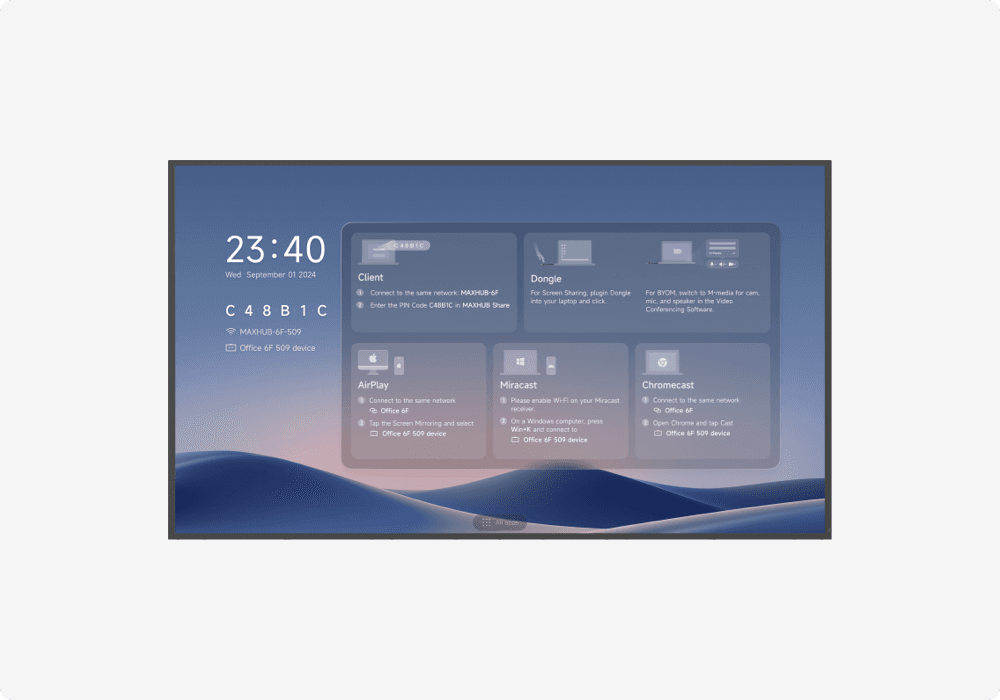
Cloud-based digital signage represents the current direction of the industry, offering fundamental advantages over traditional on-premise signage management systems. Instead of managing local servers, manually updating content via USB drives, and being physically present to troubleshoot issues, cloud signage enables remote management from anywhere, automatic software updates, instant scalability, and lower total cost of ownership. This article covers the benefits, leading platforms, and future trends shaping cloud digital signage.
What Is Cloud Digital Signage?
Cloud digital signage refers to signage networks managed through cloud-hosted software using a SaaS (Software as a Service) model. Content scheduling, display monitoring, and network management are conducted through a web browser from any location. No on-premise server is required for content management, and the cloud provider handles infrastructure, security, updates, and uptime.
Cloud vs On-Premise -- Key Differences
| Factor | Cloud | On-Premise |
|---|---|---|
| Infrastructure | Provider-hosted servers | Local servers |
| Access | Anywhere via web browser | On-site or VPN |
| Cost Model | Monthly/annual subscription | Perpetual license + server |
| Updates | Automatic by provider | Manual IT team effort |
| Scalability | Add screens in minutes | Server capacity dependent |
| IT Overhead | Low | High (server maintenance) |
| Data Location | Provider data centers | On your premises |
Benefits of Cloud-Based Digital Signage
Remote Management from Anywhere. Manage screens across multiple locations from a single dashboard. Push content updates in real time without on-site visits. Monitor display health, connectivity, and playback status remotely. This is transformative for multi-location businesses managing signage across cities or countries.
Lower Upfront Costs. No server hardware to purchase, maintain, or replace. SaaS subscription spreads costs over time. Reduced IT staffing requirements for signage management. The total upfront investment shifts from significant capital expenditure to manageable operational expenditure.
Automatic Updates. Software updates, security patches, and new features are deployed by the cloud provider automatically. Your signage network always runs the latest version without manual intervention or scheduled maintenance windows.
Scalability. Add new screens in minutes with no infrastructure changes. Scale from 5 screens to 5,000 screens on the same platform. Multi-location and multi-region management scales seamlessly.
Reliability. Enterprise cloud platforms offer 99.9%+ uptime SLAs with automatic failover and redundancy. Most platforms include offline playback capability: content is cached locally on the media player or SoC display, so screens continue operating even if internet connectivity is temporarily lost.
Integration Capabilities. API-driven integration with business systems enables real-time data feeds (weather, social media, POS, KPIs), webhook triggers for event-driven content changes, and connection to existing enterprise tools and workflows.
Leading Cloud Signage Platforms
Samsung MagicINFO Cloud. Samsung's cloud management platform for Tizen SoC displays with tight hardware integration and enterprise security. The natural choice for Samsung commercial display deployments.
LG SuperSign Cloud. LG's cloud CMS for webOS commercial displays with intuitive scheduling and management interface.
Third-Party Platforms. Signagelive, Yodeck, Screenly, and Navori offer hardware-agnostic cloud management for mixed-vendor environments. See our detailed signage software comparison for feature-by-feature analysis.
Future Trends in Cloud Digital Signage
AI-Powered Content Optimization. AI analyzing audience demographics (age, gender, dwell time) via camera sensors to serve targeted content dynamically. Automated A/B testing and content performance optimization. Generative AI for dynamic content creation and personalization at scale.
IoT and Sensor Integration. Motion sensors, ambient light sensors, and occupancy detection enabling contextual content that responds to environmental conditions. Integration with smart building systems for energy management and space optimization.
Edge Computing. Local processing on SoC displays and media players for latency-sensitive applications, with cloud synchronization when connected. This hybrid approach combines the reliability of local operation with the management convenience of cloud.
5G Connectivity. 5G enabling high-bandwidth content delivery to outdoor and remote signage locations, reducing dependence on wired network infrastructure and enabling real-time content streaming without buffering.
When Cloud Signage Is Not the Right Fit
Data sovereignty and compliance requirements may mandate on-premise data storage in certain industries (defense, government). Air-gapped networks with no internet access require on-premise CMS. Extremely high-volume content (very large video files for LED walls) may exceed practical cloud bandwidth. For these scenarios, on-premise or hybrid approaches remain appropriate.
Frequently Asked Questions
Is cloud digital signage secure?
Enterprise cloud platforms use encryption (in-transit and at-rest), role-based access control, multi-factor authentication, and comply with SOC 2, ISO 27001, and other security standards. They are generally more secure than self-managed on-premise servers.
What happens if the internet goes down?
Most cloud signage platforms support offline playback. Content is cached locally on the media player or SoC display, so screens continue playing scheduled content. Updates sync automatically when connectivity is restored.
Is on-premise signage going away?
On-premise retains a role for air-gapped networks and strict data sovereignty requirements. However, the industry trend is firmly toward cloud for its management advantages and lower total cost of ownership.
Considering cloud-based signage? Our team evaluates Samsung MagicINFO Cloud, LG SuperSign Cloud, and third-party platforms based on your requirements. Talk to our specialists.